


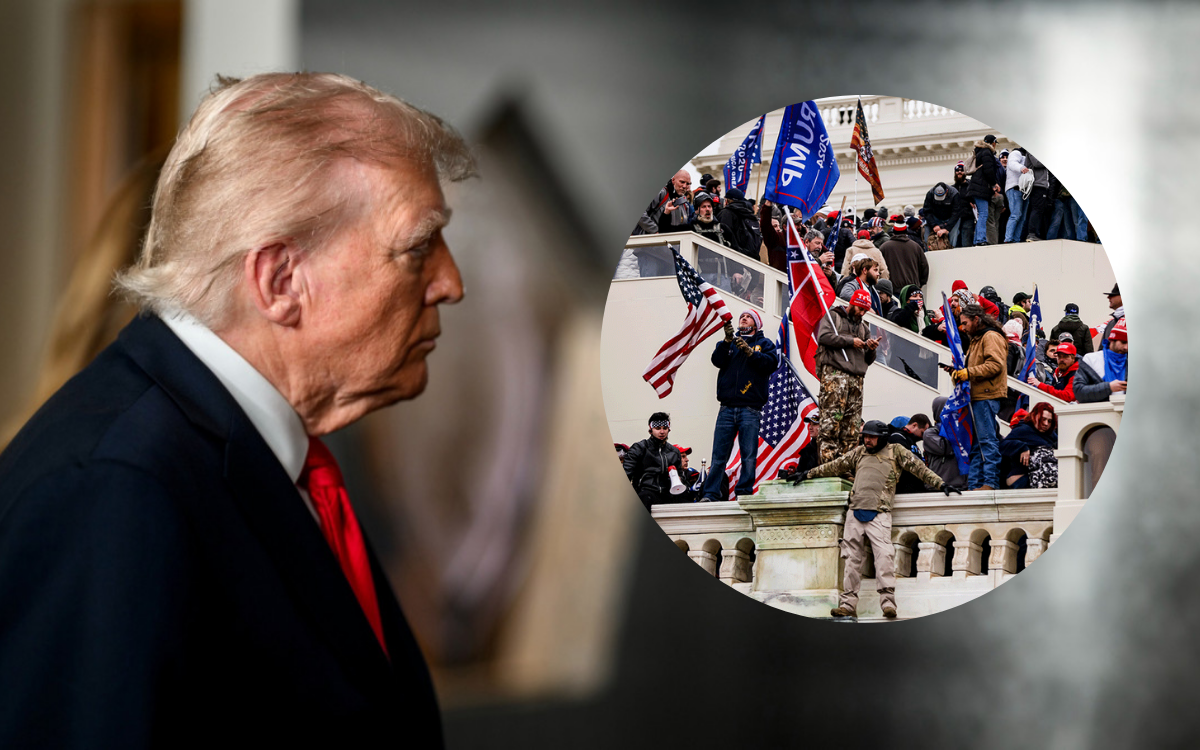
From Christian nationalism to “Great Replacement” theories, these ideas now shape laws, speeches, and party strategies threatening civil rights, vulnerable populations, and the stability of American democracy.
Only ten years ago, it would have been unthinkable for white supremacist ideas to take root inside the U.S. political and governmental system. Today, these narratives are part of mainstream public discourse and even serve as the basis for new laws that endanger the rights of minority groups such as immigrants and African Americans.
During a briefing help by American Community Media (ACoM), titled “The Mainstreaming of White Supremacy: From the fringes of everyday life to the halls of American power,” experts analyzed how these ideas have embedded themselves in the U.S. political landscape during the Trump era—and how they continue gaining legitimacy among sectors of the population.
Obama, Trump, and the Activation of Racial Resentment
Professor Sanford Schram pointed to a clear turning point: the election of Barack Obama. “The reaction to the election of the first non-white president activated a more conscious, more resentful, and politically organized white identity,” he explained.
Although the foundations of white nationalism were already present, Schram argued that the mix of racial resentment, the rise of the Tea Party, and Donald Trump’s rhetoric ultimately legitimized views that had previously been inadmissible in the public sphere—and turned them into electoral strategy.
For Heath Rosenthal, the phenomenon cannot be understood without examining the digital ecosystem that amplifies these messages. “Today there are thousands of people online saying Hitler wasn’t that bad. It’s no longer a meme. They mean it,” he warned.
Anonymity, algorithms, and echo chambers did the rest: remarks that once would have triggered public rejection are now normalized among groups bound by indignation, conspiracy theories, and deep distrust of institutions.
Christian Nationalism: Where Faith, Race, and Power Intersect
A central part of the discussion focused on Christian nationalism—a political project, not a spiritual movement, that seeks to legitimize the idea that the United States should be governed according to religious principles.
Matthew Taylor and Heath Rosenthal agreed that this movement is not an expression of faith but a vehicle for power. Rosenthal added an unsettling detail: many of its leaders openly advocate eliminating women’s right to vote and promote a social order in which men rule by “divine design.”
He also highlighted the uncomfortable fact that pro-Trump coalitions have succeeded in linking these sectors with Latino and Black communities through religious media networks and messianic narratives—such as “Trump as God’s chosen one” or “protector of Israel.”
The Leap Into Public Policy
David Burghart offered the most striking data point: what began in digital fringes now influences state and federal laws. His research shows that thousands of state legislators have belonged to or allied themselves with extremist movements. Ideas once dismissed as fringe—such as conspiratorial “geoengineering” claims or COVID denialism—have already inspired laws in at least two states.
The extremist movement grew from thousands to millions of adherents during the pandemic and the Trump years. “None of this comes out of nowhere. These are ideas incubated on the margins that then ascend to the center of political power,” Burghart said.
Schram stressed that the normalization of white supremacy is no longer just incendiary rhetoric—it has become a mode of governance. He pointed to court rulings that enabled discriminatory practices and warned that the ultimate goal of these sectors is “to completely repeal civil rights laws.”
Taylor added that the decline of Christianity as a demographic majority has intensified Christian nationalism. That identity-based fear fuels political projects such as MAGA, which he described as “the intersection between the white majority that fears disappearing and the Christian majority that does not want to become a minority.”
In parallel, Burghart warned about the normalization of conspiracy theories like the “Great Replacement,” amplified by media figures such as Tucker Carlson and bolstered by organizations with eugenic roots.
The panel agreed that the battle also extends into education and culture, where new initiatives aim to rewrite U.S. history by removing references to slavery and segregation.
Despite the growth of these movements within the Republican Party, the experts emphasized that democratic majorities still exist and can respond. “They’re loud, but they’re not popular,” Druzin reminded the audience.