


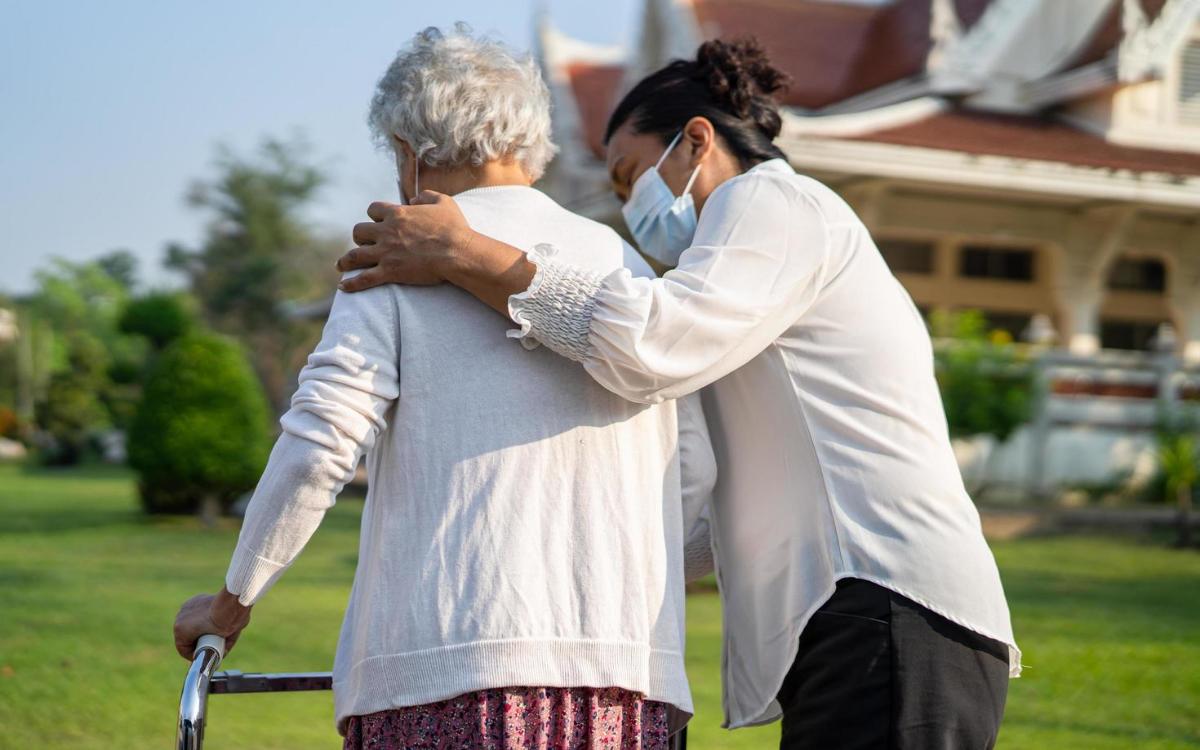
In a state where 7 million families provide care for older adults and people with disabilities, most do so without pay, with limited support, and without recognizing themselves as caregivers. The challenge is to make their labor visible and connect households with the resources that can prevent emotional, physical, and financial exhaustion.
Faced with institutional neglect, cuts to social programs, and daily precarity, it is informal caregiving—silent, widespread, and often unpaid—that sustains much of California’s health system. An estimated 7 million families in the state provide daily support to older adults and people with disabilities. Yet most do not identify as caregivers, leaving them without information, without resources, and facing emotional, physical, and financial strain on their own.
American Community Media (ACoM) brought together caregivers and experts who shared their testimonies and discussed the challenges facing public health in California. The central goal was to shed light on the impact of caregiving and explain what forms of support exist in a context where the population is aging rapidly.
An Invisible Network
Susan DeMarois, director of the California Department of Aging (CDA), reminded attendees that 65% of long-term care in the state is unpaid and provided at home. Despite the difficulties, she emphasized that caregivers must know they are not alone—and that resources are available to support them.
California relies on two longstanding pillars of support: the Area Agencies on Aging (AAA), present across all 58 counties, and the Caregiver Resource Centers (CRC), both with more than 40 years of service. “These networks offer guidance, community services, emotional support, and education for people who are just discovering that—without realizing it—they were caregivers all along,” DeMarois said.
Testimonies like Dan Salinger’s reveal how caregiving can arrive suddenly and without warning. He recalls the moment he realized something was wrong with his father’s memory: “One day he walked into the room where he always took his nap and said, ‘Oh, you built a new room.’ I knew that wasn’t normal aging.”
From that moment on, Salinger began a journey of vigilance, daily assistance, transporting his father between homes, and eventually full-time care. After a fall that broke his father’s hip, his father became completely dependent. The emotional and financial strain was constant: Salinger had to quit his career as a lawyer and live off rental income. His father’s popularity on social media helped cover some expenses, but he acknowledges that most families do not have that option.
The experience of Alma Valencia, who cares for her mother Linda, followed a different path. She recalls that her mother began exhibiting unusual behavior, leaving bills unpaid, and receiving visits from strangers. “At first no one in the family understood. We thought it was menopause or a midlife crisis.” Alma left her job in the fashion industry to devote herself entirely to caring for her mother, a shift that transformed her family’s daily life. “My children were raised while watching their grandmother’s deterioration,” she said.
However, part of the burden eased when she qualified for IHSS (In-Home Supportive Services), the state’s largest home-care program, which allows family members to be paid for caring for older adults or people with disabilities.
What Do Caregivers Need?
Caregiving transforms—but it also wears people down. Building a network capable of supporting and accompanying caregivers has become an urgent need. Paul Donovan (Sonoma County Human Services Department) and Dr. Donna Benton (USC Family Caregiver Support Center) highlighted the existence of formal networks and agencies dedicated to this work.
Donovan stressed that “caregiving is a very personal and profound act, but it can also be deeply isolating.” He explained that local Triple A agencies offer training, counseling, support groups, respite activities, and personalized plans for those who take on the caregiving role without pay. “If I had to choose one guiding message, it would be the need to recognize caregivers’ needs.”
For him, one aspect is essential: caregivers must recognize themselves as such. If they do not value their own labor, they are far less likely to seek help or access available resources.
Dr. Donna Benton emphasized how caregiving has changed as people live longer and families become smaller. “With today’s longevity, caregiving lasts 10 years or more,” she explained, adding complexity to the daily work involved.
The panel also underscored the role of Caregiver Resource Centers throughout the state. “We don’t look at people’s income; you can see our resources online. Immigration status doesn’t matter either,” they noted. The message was clear: “Anyone who thinks they might be eligible should seek help.”
Caregivers also highlighted the role of social media in spreading information and connecting caregivers to supportive communities.
As the discussion concluded, speakers emphasized planning ahead and understanding caregiving as a shared responsibility. Donovan summarized the spirit of the panel by saying that society should move from prioritizing independence to valuing “interdependence.” Benton reinforced the importance of family self-advocacy: “We need to advocate for ourselves and start early.”
(Those seeking guidance or support can turn to the Family Caregiver Support Center, the Los Angeles Caregiver Resource Center, or the California Association of Area Agencies on Aging.)